

My new book, So Fetch: The Making of Mean Girls (and Why We’re Still So Obsessed with It), is out now. See below for details on upcoming appearances.
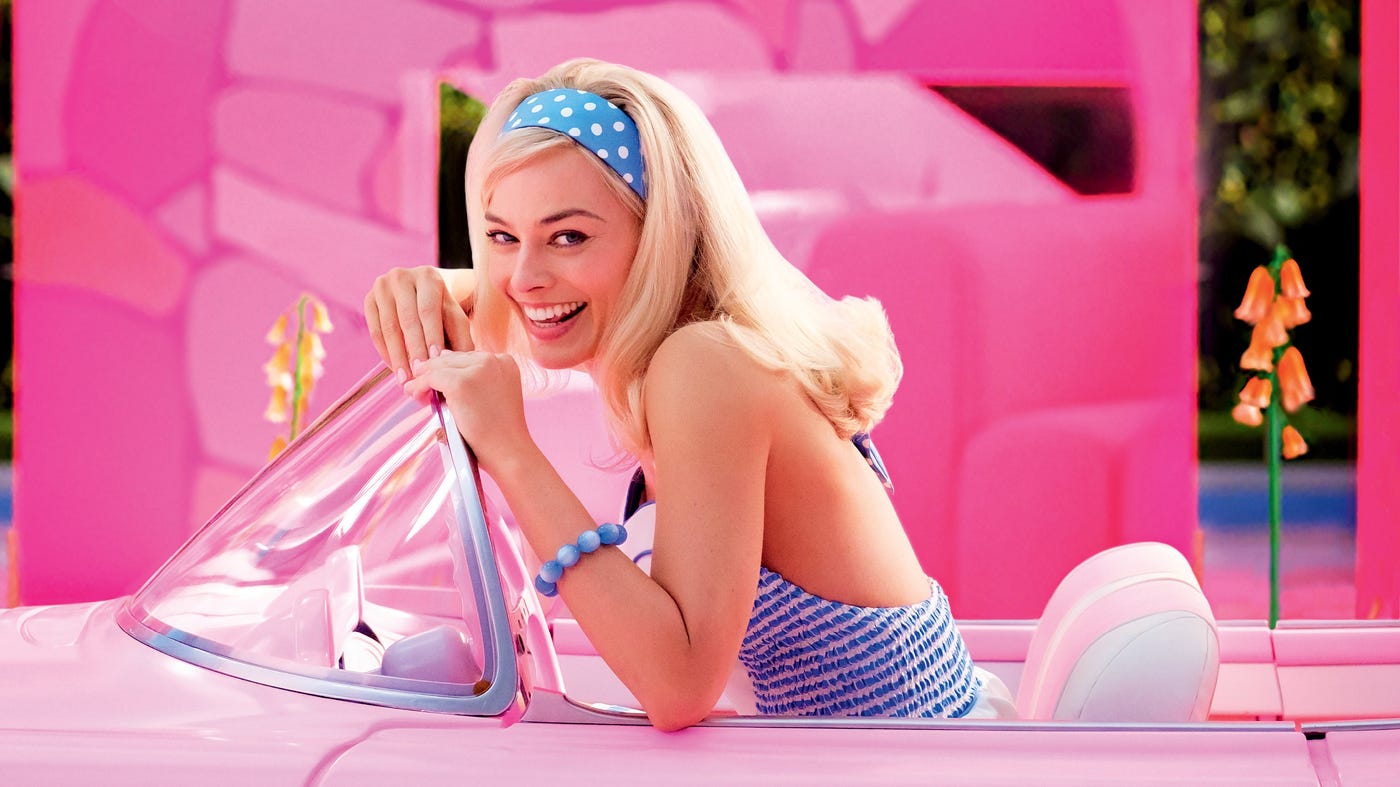
Comedian Jo Koy bombed as the host of the Golden Globes by starting with a monologue in which he lauded the male-centric ode to patriarchal power Oppenheimer, only to make Barbie a demeaning punchline: "Oppenheimer is based on a 721-page Pulitzer Prize-winning book about the Manhattan Project, and Barbie is on a plastic doll with big boobies.” Though his performance has been thoroughly eviscerated, this line is still sending shock waves of rage through me two weeks later. I cannot believe that anyone would think to say such a thing in the year of our lord Barbie, in which Beyoncé and Taylor sat at her right and left hands in a holy trinity of cultural power.
It’s heartening that Koy’s performance was met with a chorus of “nope” from the masses. He looked as ridiculous as the Kens at the height of their horse-driven patriarchy.
Still, I’m not convinced we’re in the clear when it comes to holding onto the enormous achievements of women in culture in the past year, taking them seriously and making them count, seeing real long-term change.
This strikes me as the endpoint of a historical arc that began with the 2004 release of Mean Girls. The movie’s debut at the top of the box office chart shocked the industry and demonstrated, for the first time, the economic power of Millennial girls. They were consistently underestimated then, and that same audience has now grown up and is dominating culture as the core fanbase of Barbie, Beyoncé, Britney, and Taylor. In fact, the new Mean Girls musical movie opened at the top of the box office this weekend, demonstrating the franchise’s 20-year staying power and its audience’s zeal.
One wonders, however, if the industry will heed this data and do better by this audience. Historically, it has not.
The original Mean Girls and 13 Going on 30 came out within weeks of each other and both opened at No. 1, sparking a flurry of thinkpieces about how young women were—shocker of shockers!—eager to see themselves reflected onscreen. Their ability to turn out not once, but twice, for good movies aimed at them rocked box office prognosticators. The industry swore to serve them. (You can read more about this in my book, So Fetch.)
But the lessons seemed to be quickly forgotten, and thus began an almost comically repetitive cycle that followed that same Millennial female audience as they aged up: Every few years, filmmakers would beg to get a movie made for these women, manage to eke one out despite low box office projections, then blow past all expectations when the film was released, prompting the industry to express total surprise. Again and again, the drill repeated: In 2008 with the first Sex and the City movie, in 2011 with Bridesmaids. Meanwhile, 2000s tabloid culture eviscerated Mean Girls star Lindsay Lohan and other powerful young women like her—Britney Spears, Paris Hilton. Even future president Donald Trump felt free to pontificate publicly about what Lohan might be like in bed. He was nearly 60; she was 18. Young women, the media said, were a joke.
In the intervening years, feminism has gone mainstream, in good ways and bad ways. It’s been commodified and at times dumbed down, but it has also produced a cultural climate in which we would never stand now for the ways that 2000s media treated women. It has resulted in a record-breaking Barbie movie that casually presented tenets of third-wave feminism in a puff of pink.
We’ve come a long way, but perhaps not far enough. Many of women’s enormous achievements in culture in the past year were summarized by year-end pieces as an explosion of “girl culture,” which struck me as its own kind of subtle diminishment.
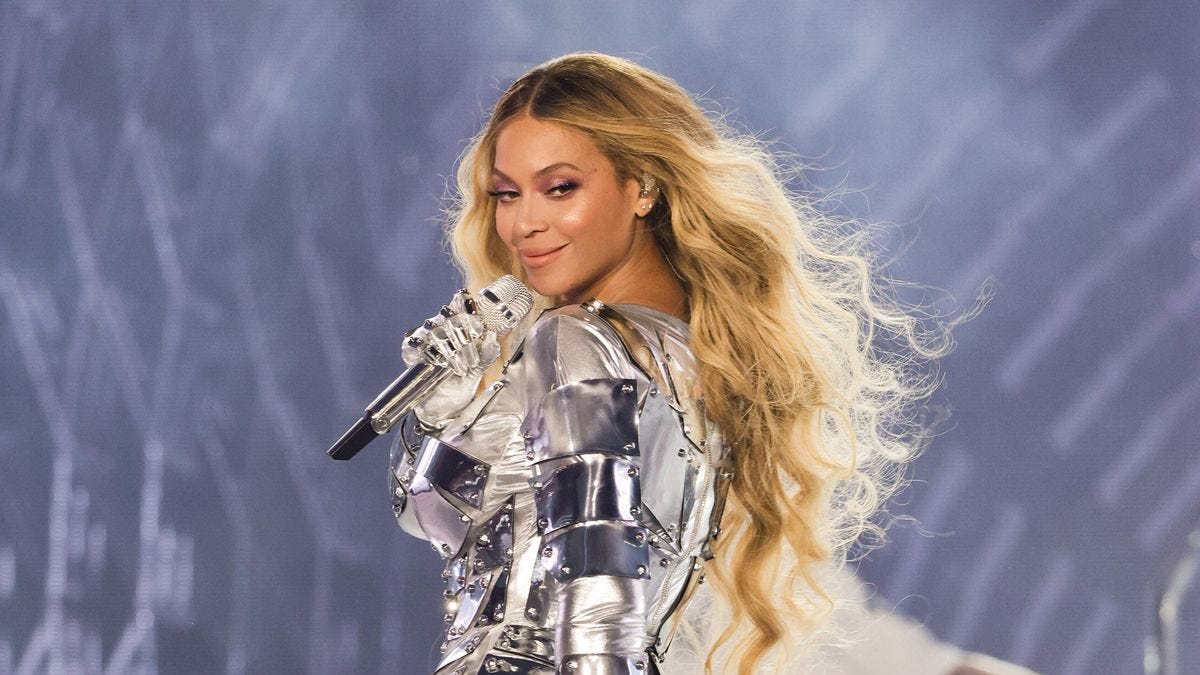
The annual wave of year-end thinkpieces brought with it a popular refrain: 2023 had been “the year of the girl.” Some celebrated. Others warned of this phenomenon’s down sides. They all cited Beyoncé’s Renaissance Tour and Taylor Swift’s Eras Tour, along with Barbie and sometimes Britney Spears’s memoir The Woman in Me, as the high points of the graph of this trend, the cultural behemoths and major financial successes that embodied the ascendance of all things “girl.”
Only a startling few of these ruminations referred to the women powering this trend—the pop stars and filmmakers, as well as the people patronizing their works—as “women,” which is what they are. Grown, powerful women with money to make and money to spend, visions to share and visions to appreciate. They know this. Beyoncé recently released her long-bootlegged song “Grown Woman,” and her behind-the-scenes film about the Renaissance Tour emphasizes her identities as a meticulous boss and mother. Spears’s book is literally called The Woman in Me. Even Barbie, whose origins as a toy make the “girl culture” label most forgivable, goes to the gynecologist as her final, definitive act in the film, quite clearly staking a claim to womanhood.
These women strode confidently into arenas and movie theaters, spaces long dominated by men in sports uniforms and superhero capes, and took them over this year. By the end of the year, Swift even dominated the National Football League itself by deigning to date a player and showing up at some of his games. While clearly not an intentional act of feminism, nor a radical one, it had a subversive effect, making some men deeply uncomfortable.
Now, I’m not a stickler about “girl” versus “woman.” I co-wrote a book called Sexy Feminism that came out in 2013, and we had a lot of discussions about the subtitle that referred to “girls.” I came down on the side of “girls” as young women, no further questions asked. And there has been a genuine girlishness wave going on in fashion, and even vocabulary (“girl dinner,” “girl math”), as this thoughtful Who What Wear piece explains. But I appreciated the way that The Skimm brought all of this together under the umbrella of “The Year of Women,” rather than lumping Barbie, Beyoncé, and Taylor in with “girls.”
These women have achieved unprecedented success. The fact that they have done so while embracing traditionally feminine touches like friendship bracelets, sequins, and pink only adds to the achievement. It shouldn’t then be reduced with an infantilizing term.
I gasped when I heard Koy’s Barbie joke because it so denigrated something that feels personal to me, and showed such a fundamental misunderstanding of the film. Barbie wasn’t about a plastic doll or her breasts. It wasn’t even just about a feminist utopia. It was about a character’s spiritual journey, a spiritual journey that showed us the flawed and impermanent—but still beautiful—nature of humanity. I daresay that many of the other “serious” Oscar contenders did no such thing, nor with such stunning creativity. I was thrilled to see so many people react online the next day, equally incensed.
Much was made about how unamused Swift looked at Koy’s joke about how the broadcast would have fewer camera shots of her than an NFL game would. Maybe she was not amused because the entire routine had not been amusing. I couldn’t help thinking about her song “The Man”: “I’m so sick of them coming at me again, ‘cause if I was a man, then I’d be the man.”
And surely, no one would call her a “girl.”

Join me on book tour!
January 17, 7:30 pm
Brooklyn
So Fetch launch party at Good Judy, 563 5th Avenue, Brooklyn. Mean Girls clips and discussion with Time culture reporter Moises Mendez.
January 22, 7 pm ET
online, via Ashland Public Library
I’ll show clips and talk all things Mean Girls and So Fetch in this online presentation.
January 31, 7 pm
Toronto
So Fetch book discussion at Hot Docs in Toronto with moderator Monica Heisey (Really Good, Actually; Schitt’s Creek) along with Mean Girls cast members Jan Caruana (“Regina George is flawless”), Stefanie Drummond (“I wore Army Pants and flip-flops”), Chris Anton (“Nice wig, Janis, what’s it made of?”), and Glen Coco himself, David Reale.
February 1, 6:30 pm ET
online, via West Hartford Public Library
I’ll show clips and talk all things Mean Girls and So Fetch in this online presentation.
February 7, 7 pm
Woodstock, NY
So Fetch book event at Tinker Street Cinema, with books from The Golden Notebook. Mean Girls clips and discussion with author Sari Botton.
March 6, 6:30 pm
Chicago
So Fetch book discussion at the American Writers Museum.
This is excellent! And happy pub day too :)
Happy book birthday!!!